Finding Ways to Be Understood: Benji and Giulietta’s Communication Journey
Updated: Jun 23
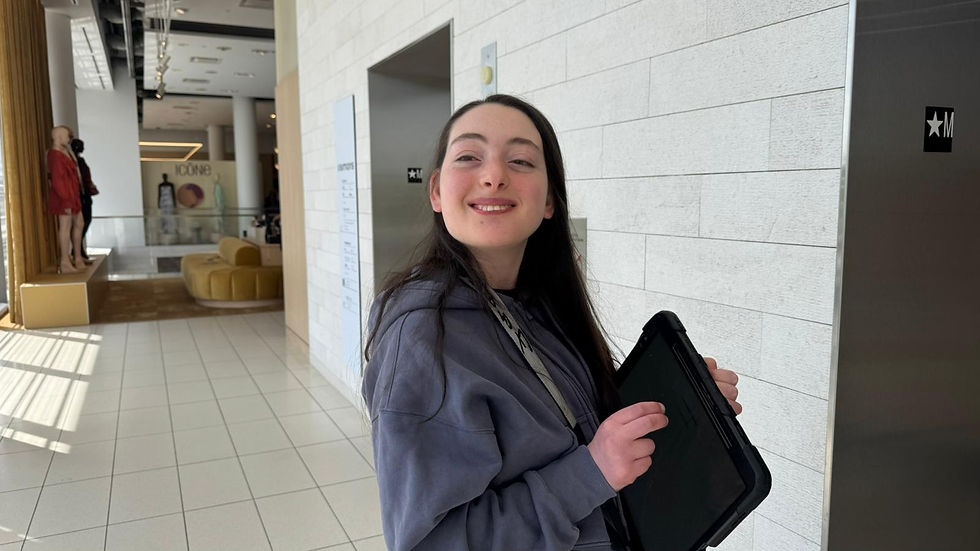
For Benji and Giulietta, communication has never just been about speech. It has always been about finding ways to be understood in everyday life. Communication is one of the most important foundations of independence, choice-making, and community participation, and for both of them it has also been one of the most complex areas of support.
Benji and Giulietta live with Phelan-McDermid Syndrome and childhood apraxia of speech, which impacts the ability to plan and coordinate the movements needed for spoken language. Giulietta is fully non-verbal and does not use spoken words to communicate. Benji is able to say a small number of words such as “hi,” “bye,” “done,” and “more,” however these are not always consistent and may not always be used in the correct context or at appropriate times. While they understand far more than they are able to express verbally, finding reliable ways to communicate thoughts, needs, preferences, and emotions has required ongoing support throughout their lives.
Early on, traditional speech and language therapy was part of this process, and a significant amount of time, energy, and funding was invested. While it was well intentioned, it did not lead to meaningful communication outcomes for Benji and Giulietta, which is what eventually led to a shift toward more functional, real-life communication supports.
Communication systems are not one-size-fits-all. What works for one person may not work for another, and what works at one stage of life may need to change as needs and interests evolve. For Benji and Giulietta, communication supports have developed over time and continue to evolve as they grow. This has included Picture Exchange (PECS), visual supports, and Augmentative and Alternative Communication (AAC) tools such as Proloquo, all used in ways that are woven into real routines and real environments rather than being limited to structured settings.
Communication shows up throughout the day in practical and meaningful ways. It is used when making choices, expressing preferences, asking for help, participating in work, following routines, connecting with others, and engaging in community activities. These are not isolated teaching moments. They are part of everyday life at home, at work, and in the community.

A key part of what made communication more meaningful for Benji and Giulietta was ensuring that the systems themselves reflected who they are as individuals. For Benji, PECS cards were developed and continuously adapted around his interests, his daily routines, and the things that are actually relevant to his life. Rather than using generic or pre-made sets, his communication system is built around what he sees, does, and experiences every day, so that it is practical and usable in real moments.
For Giulietta, Proloquo is set up in a very intentional and individualized way. Her communication system is organized around her interests, her routines, and her day-to-day schedule in a way that makes sense to her. It is not a standard layout. It is customized so that she can navigate it in a way that supports real understanding, real choice-making, and real participation in her daily life.
As communication became more consistent, something important shifted. There was less frustration and more opportunity for connection. When Benji or Giulietta are able to express what they want or need, even in simple ways, it changes how they are able to move through their day. It creates more understanding and more confidence in participating in what is happening around them.
Consistency across environments has also been key. Communication only becomes meaningful when it carries across settings. Whether at home, at work, volunteering, or in the community, the same systems and expectations are supported so that communication does not need to be relearned in every space. It becomes something stable they can rely on wherever they are.
Over time, communication has become closely tied to independence. Being able to express choices, preferences, and decisions allows Benji and Giulietta to take a more active role in their own lives.
Communication is not just about language. It is about being understood, having a voice, and being able to take part in life in a way that feels meaningful and connected for Benji and Giulietta.
Supporting Blogs:
How We Encourage Giulietta to Initiate Communication Independently
How We Incorporate PECS in Daily Routines for Consistency and Practice
How We Support Giulietta’s Independent iPad Use for Requests and Comments
Expand iPad Communication Vocabulary for Different Environments — Home, School, Community
Mealtime Communication Using PECS Cards: Learning Plan for Benji "More" and "All Done"
Building Communication Skills Through Personalized AAC Strategies


Comments