Building Communication Skills Through Personalized AAC Strategies
Updated: Nov 17, 2025

Finding Her Voice: Giulietta’s Journey to AAC
Giulietta was diagnosed with verbal apraxia and received extensive speech therapy, including early intervention with the PROMPT method, but made no measurable progress. While her receptive language skills were strong, she was unable to produce verbal speech. At age five, her communication goals transitioned to focus on AAC (Augmentative and Alternative Communication).
Giulietta began learning to communicate using PECS, becoming proficient over several
years. Speech-language pathologists worked intensively with her until she was 7. Her
team observed and learned from the therapists, then shaped a program customized to
her specific interests while incorporating AAC principles. Initially, she learned to identify core pictures matched with real-world items like specific foods at a grocery store, as she loved attending there.
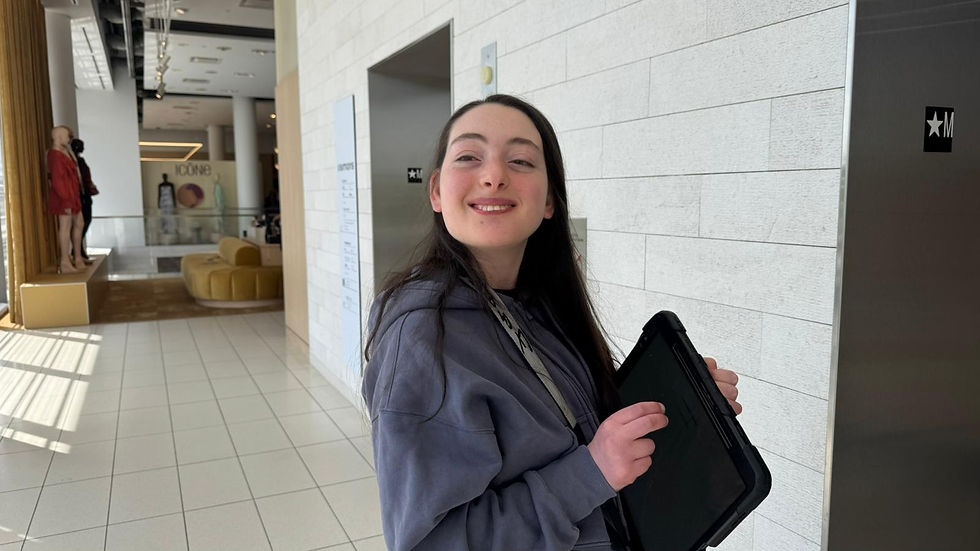
Eventually, Giulietta moved from PECS to Proloquo2Go, an AAC app for iPad that uses
symbol-based buttons and text-to-speech technology to help nonverbal or minimally
verbal individuals communicate by selecting words, phrases, or images that the device
speaks aloud. With guidance from her support team and tailored strategies, she
became proficient in Proloquo2Go, now her main communication tool.
Through continued practice, she adapted to a personalized layout that incorporated her favourite books, songs, foods, and places. Even though she is nonverbal, this approach allowed her to make requests, respond yes or no, and as her skills grew, express opinions, ask questions, and participate in conversations. Using her iPad for
communication has become integrated into her daily routines, making learning
meaningful and connected to what is important to her.


Comments