How We Foster Giulietta’s Communication During Mealtimes

Encouraging Mealtime Conversations
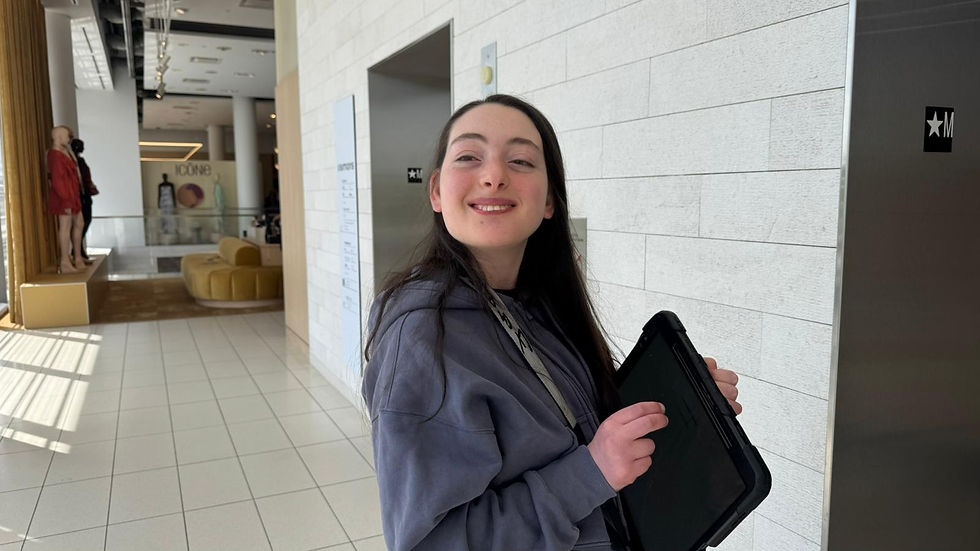
Mealtimes provide a natural and meaningful opportunity for Giulietta to practice communication in a relaxed and supportive setting. During these moments, she is encouraged to use her iPad to share details about her day and express her thoughts in full sentences. Rather than responding with single words, she is supported to expand her communication in ways that reflect her experiences. For example, when asked about her day, she might say, “I go grocery store find spinach,” or “I drive go library.”
While her sentences may not always be grammatically perfect, the focus is on ensuring that she is successfully communicating her ideas and experiences. After she shares, we model the appropriate sentence structure so she can hear how it can be expressed more clearly, without interrupting her message or placing pressure on her to repeat it.
Requesting More Food Independently
Mealtimes also offer opportunities for Giulietta to build independence in requesting what she needs. She is encouraged to use her iPad to ask for more food on her own. At times, she may begin with simple requests such as “more” or “wrap,” and from there she is guided toward using fuller sentences like “I want more sautéed wrap” or “I need help cut wrap.” This progression helps her understand how clearer, more complete sentences support better communication and reduce the chance of misunderstandings. As her communication becomes more detailed, her needs can be met more efficiently, which also helps reduce frustration.
Modelling and Supporting Sentence Development
As Giulietta continues to build her communication skills, we support her by consistently modelling longer, more complete sentence structures. When she uses shorter phrases like “More sauté wrap,” we respond by modelling a fuller version such as “I need help to cut more sauté wrap.” This gives her repeated exposure to natural, functional language in a meaningful context, without putting pressure on her to repeat it perfectly.
Expectations are kept clear, consistent, and realistic.
Because these skills are directly taught and practised through structured learning sessions, we have a clear understanding of what she is currently able to do with support and consistency. This helps guide how we set goals and makes sure expectations are appropriately matched to her current level, while still being a bit challenging in a positive way.
This approach keeps things achievable and reduces frustration, while allowing her to build confidence and continue making steady progress in her communication over time.
Positive Reinforcement and Confidence Building
When Giulietta uses full sentences to express herself, she receives positive reinforcement that acknowledges her effort and success. We also respond directly on her iPad with supportive phrases such as “Yes, I can help you cut wrap.” This type of feedback helps her feel understood, validated, and proud of her communication. It reinforces the idea that she is capable and that her voice matters, which strengthens both her confidence and motivation to continue communicating independently.
Expanding Sentence Complexity
As Giulietta becomes more comfortable using full sentences, we gradually encourage her to expand her communication further. This may include prompts that invite more detailed responses or simple follow-up questions such as, “Do you like pickles on your wrap?” These opportunities help her continue developing flexibility in her language and support her growth toward more advanced communication skills over time.


Comments